

 See My Latest Article on HelloNation
Brown patches can come from drought, insects, disease, compacted soil, pet urine, mower damage, or chemical injury. The right treatment depends on the pattern, location, and condition of the grass—not simply on how brown the area looks.
In Big Spring, TX, hot weather, strong sun, irregular rainfall, wind, and shallow or compacted soil can place steady stress on turf. A lawn may appear healthy for weeks and then develop dead-looking areas after a stretch of heat or after a heavy storm followed by drying conditions.
Are the brown patches caused by drought?
Drought stress is one of the first possibilities to check, especially when large sections of the lawn are dull, thin, or brown rather than sharply outlined.
Grass under water stress often shows these signs:
- Blades curl, fold, or turn blue-gray before becoming brown.
- The entire lawn looks less vigorous, not just one isolated spot.
- Soil feels dry several inches below the surface.
- Brown areas are concentrated near sidewalks, driveways, walls, or other heat-reflecting surfaces.
- Grass improves temporarily after deep watering.
Do not respond by watering briefly every day. Light irrigation can encourage shallow roots and may leave the lower soil dry. Instead, water slowly enough to moisten the root zone, then allow the surface to dry before watering again. The exact schedule depends on grass type, soil, sun exposure, and recent rainfall.
A simple test is to push a screwdriver or long screwdriver-like probe into the soil. If it stops quickly in hard, dry ground, the turf may be suffering from drought stress or compaction.
What does the shape of the patch reveal?
The shape and location of a brown area can provide useful clues.
Irregular patches near hot, sunny edges may point to drought stress or chinch bugs. These areas commonly appear beside concrete, curbs, and other surfaces that increase heat.
Circular or semicircular patches may indicate a fungal disease, particularly when the grass is thin around the edges. Disease is more likely after periods of moisture, overwatering, poor air movement, or prolonged leaf wetness.
Small, sharply defined spots can result from concentrated pet urine, spilled fertilizer, herbicide drift, or fuel and oil contamination.
Straight lines or strips may follow an irrigation problem, mower route, buried utility work, construction traffic, or a narrow area missed by a sprinkler.
Areas that lift easily like loose carpet may have root-feeding insects or severe root damage. Grass with weak roots can look brown even when the surface receives water.
The pattern may not identify the exact cause by itself, but it helps determine what to inspect next.
Could chinch bugs be responsible?
Chinch bugs are small insects that feed on grass and can cause expanding, irregular areas of yellow and brown turf. Damage is often most noticeable during hot, dry weather and in sunny portions of the lawn.
To inspect for them, part the grass at the edge of a damaged area and look closely near the soil and thatch. Adults are small, dark insects with light markings, while young insects may be smaller and reddish or orange. Movement can be difficult to see without close inspection.
Another method is to cut both ends from a metal can, press it into the soil near the damaged edge, and fill it with water. Watch the water and grass surface for several minutes. Small insects may float upward if they are present.
Do not apply an insecticide simply because the lawn is brown. Chinch bug damage can resemble drought, disease, and fertilizer injury. Treating the wrong problem can add stress without improving the turf.
Is the problem a lawn disease?
Brown patch and related fungal diseases usually produce thin, light-brown areas that may be circular, semicircular, or irregular. The grass may remain partly alive inside the patch, and the affected edge may look darker or more yellow than the center.
Disease is more likely when:
- The lawn has stayed damp for long periods.
- Irrigation runs at night or too frequently.
- Grass is cut too short.
- Thick thatch holds moisture near the soil surface.
- Nitrogen fertilizer was applied heavily before symptoms appeared.
- Brown areas spread after wet, mild weather.
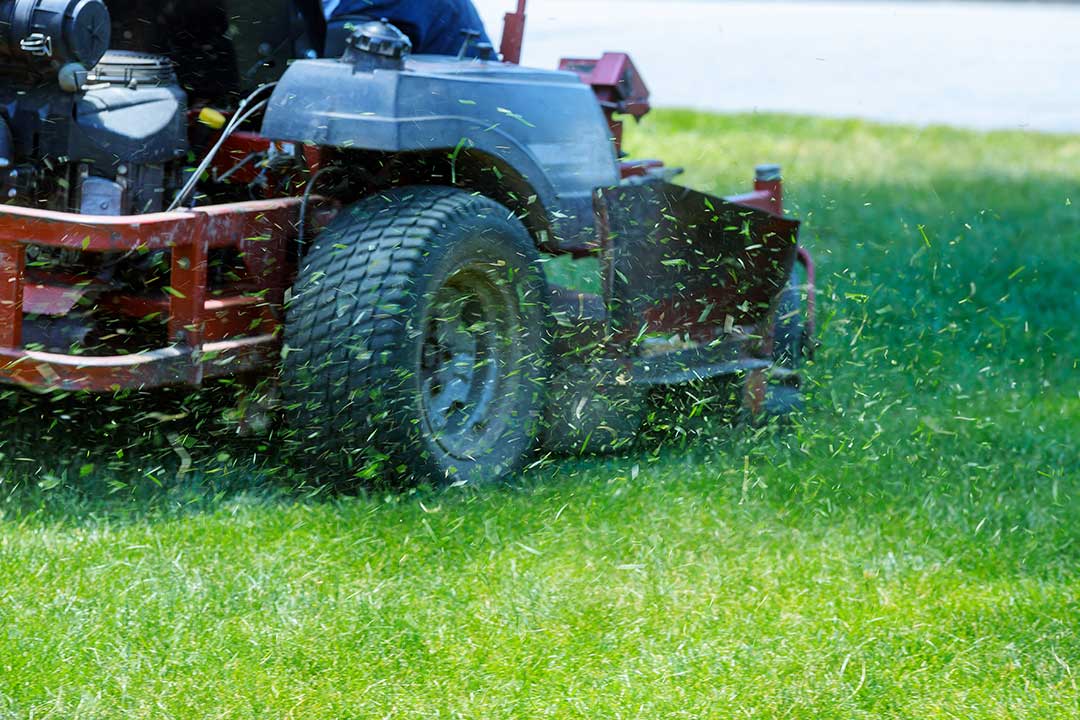
Reduce unnecessary irrigation and water early enough for grass blades to dry. Avoid mowing when the lawn is wet, and keep mower blades sharp so they do not tear the leaves. Fungicides are not a universal solution and are most useful when the disease has been identified accurately.
What about grubs and damaged roots?
White grubs are soil-dwelling larvae that feed on grass roots. Root damage may cause patches that turn brown even though the lawn is receiving adequate water.
To check, cut three sides of a small square of turf and gently peel it back. Look for pale, curved larvae in the soil near the roots. A few grubs may not justify treatment, but numerous grubs with thinning, loose turf can cause serious damage.
Replace the lifted section carefully after inspecting it. Avoid routine preventive pesticide applications unless the pest, timing, and treatment threshold are understood. Many brown patches are incorrectly blamed on grubs when drought or disease is the actual cause.
Could watering or irrigation be the problem?
A broken sprinkler, clogged nozzle, poor spray overlap, or low water pressure can create dry strips and isolated patches. Compare the brown area with the sprinkler pattern. If the patch lies between two spray zones or near the far edge of coverage, irrigation may be uneven.
Check irrigation after mowing, landscape work, or changes to the system. Sprinkler heads can be blocked by grass, soil, or mulch. Run each zone briefly and observe whether all heads rise, rotate, and distribute water normally.
Also check whether runoff is carrying water away from compacted soil. Sloped areas and hard ground may need slower irrigation cycles rather than one long application.
How should dead patches be repaired?
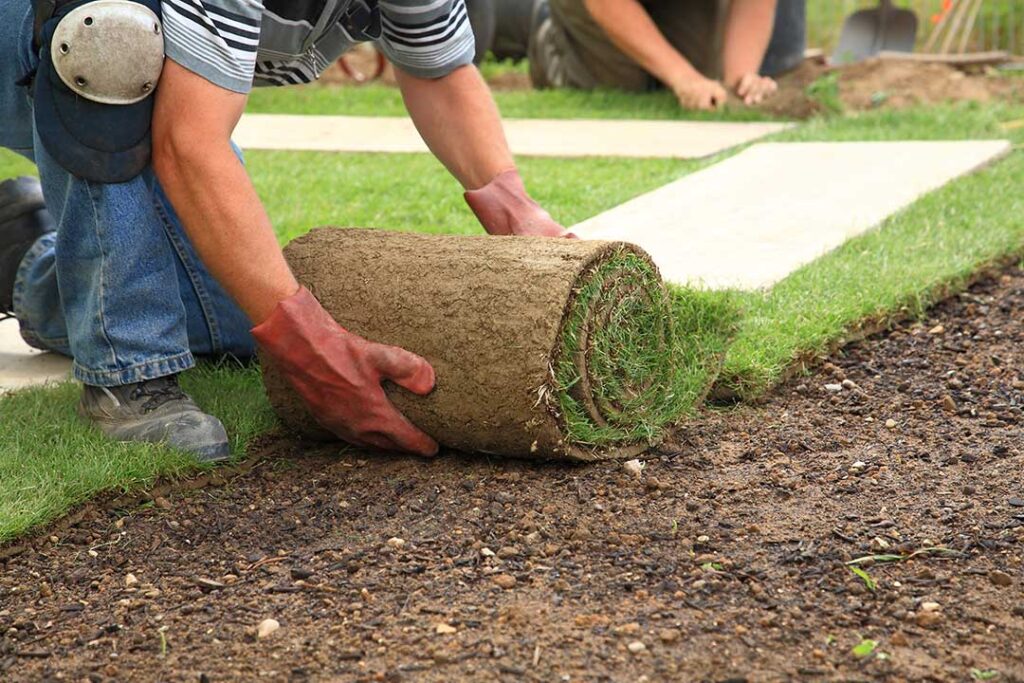
First identify and correct the cause. Reseeding or replacing turf before fixing the underlying problem usually leads to another failed patch.
After the grass has recovered or the cause is controlled:
1. Rake out loose dead material without scraping deeply into healthy roots.
2. Loosen the top layer of compacted soil.
3. Add a thin layer of suitable soil or compost if the surface is low or heavily depleted.
4. Use seed or replacement sod that matches the existing grass and the site’s sun exposure.
5. Keep the repair evenly moist while roots establish, but avoid constant saturation.
6. Limit foot traffic until the new grass is firmly rooted.
Pet-urine spots may recover after thorough watering and light raking, though severely damaged areas may need reseeding. Chemical spills require removal of contaminated soil before replanting.
When should a brown patch be investigated more closely?
Look more carefully when a patch continues expanding, returns in the same location, appears despite adequate soil moisture, or affects several lawns in a similar way. Repeated problems can indicate compacted soil, poor drainage, chronic irrigation failure, insect pressure, or a disease that needs confirmation.
Photograph the area when symptoms first appear, including a close view of the grass blades and a wider view showing nearby sidewalks, sprinklers, trees, and shaded areas. Note recent rainfall, irrigation, mowing, fertilizer use, and temperature changes. These details often reveal a pattern that is difficult to see later.
A brown lawn is not automatically a dying lawn. Many grasses can recover from temporary heat and water stress once the root zone is restored. Careful observation before watering more, fertilizing, or applying pesticides is usually the most reliable first step.